
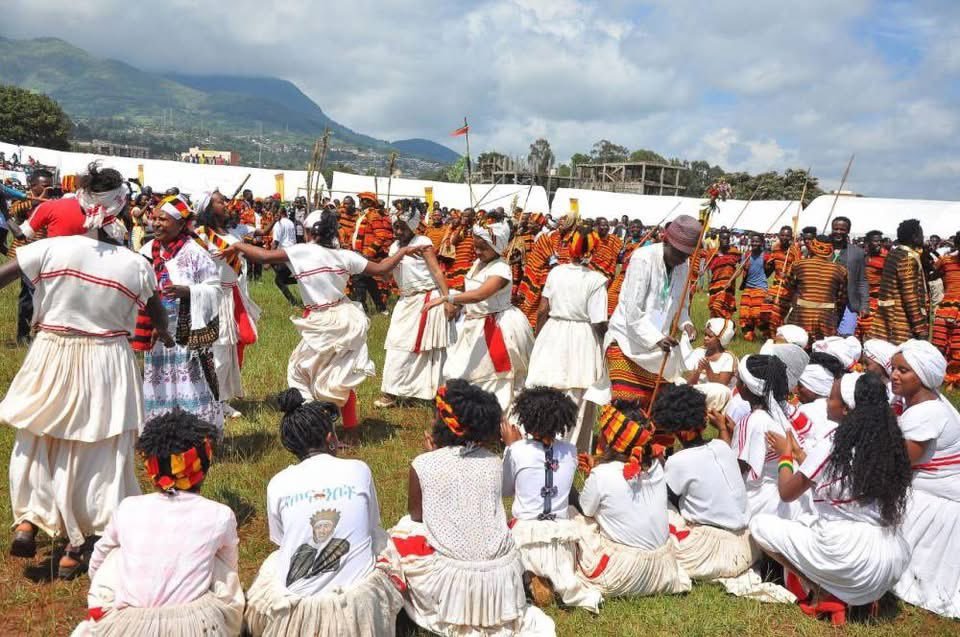
Gifaataa, the New Year Festival of the Wolaita people of Ethiopia, has been inscribed on UNESCO’s Intangible Cultural Heritage of Humanity. The 20th session of the Intergovernmental Committee for the Safeguarding of the Intangible Cultural Heritage (ICH), held in New Delhi from December 8 to 12, inscribed the New Year Festivities as a heritage of humanity.
Gifaataa is celebrated on the first Sunday (Shuha-Wogga) between September 18 and October 1. Gifaataa consists of community gatherings, festivities, community service and values such as cleanliness, peace and reconciliation.
A country of prehistoric heritages and ancient traditions and deep-rooted cultural practices, Gifaataa becomes Ethiopia’s 7th intangible heritage inscription along with Shuwalid Festival, Xeer Ciise, Timket (Ethiopian Epiphany), Gada System, Fichee Chambalaalla and Meskel. Since registering the Rock-Hewn Churches of Lalibela in 1978, Ethiopia has registered eleven natural and cultural properties in the UNESCO list of World Heritage, the latest being the Bale Mountains National Park and Gedeo Cultural Landscape, inscribed in 2023.
Gifaataa’s inscription as a world heritage site is yet another testimony to Ethiopia’s ancient civilization and its invaluable heritage in celebrating diversity. The inscription is a global recognition proving the outstanding and distinguished value of Gifaataa and its role in fostering peace, development and equal participation.
Ethiopia contributes to the work of UNESCO through its regular membership on the UNESCO Executive Board, including for the 2025-2029 term, and the Intangible Cultural Heritage Committee, where it is a member for the term of 2022-2026 and a vice president for the 20th session in New Delhi. This role is critical to advancing the working methods and adjusting the longstanding imbalance in the work of the global body that led to the minimum number of heritages inscribed from the African continent.
The inscription augments the national efforts for conservation, preservation, and promotion of the heritage to the global community.