
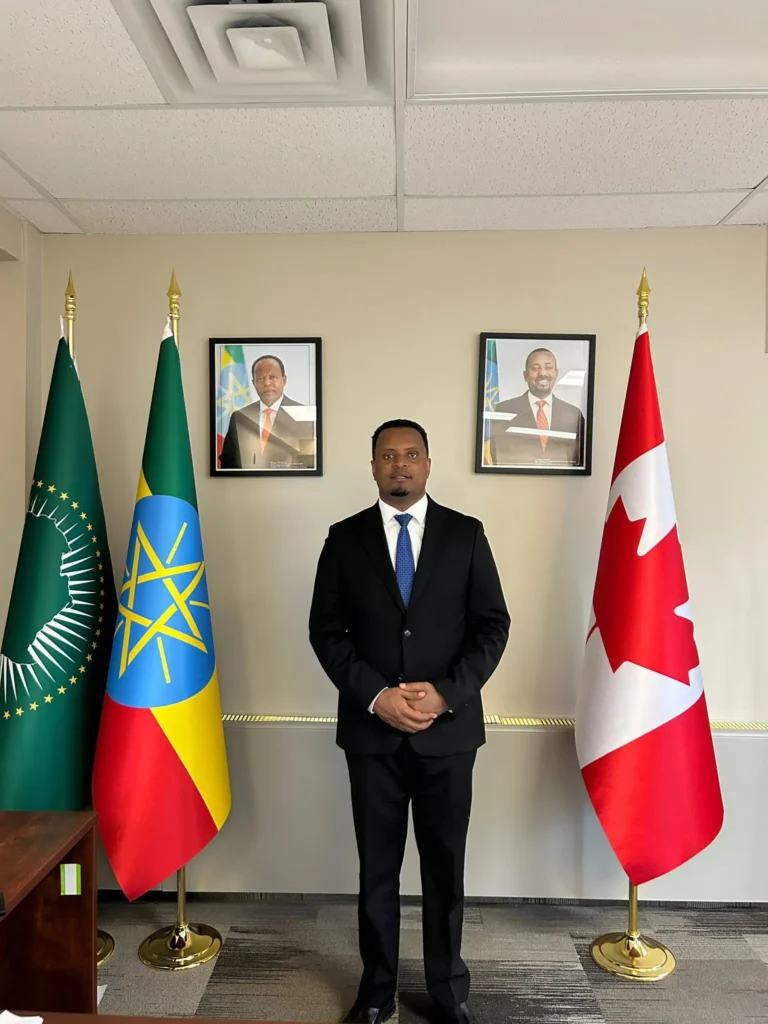
Tewodros Girma, Ethiopian Ambassador to Canada
Political polarization has emerged as a global phenomenon affecting democracies across diverse political and cultural contexts. This trend has been exacerbated by the widespread misinformation and disinformation on digital platforms, which has deepened social divisions and eroded trust. As a result, nations around the world are exploring strategies to foster social cohesion and resilience as a means of safeguarding democratic governance, social stability, and unity of the people. Ethiopia is no exception.
Recommended News
- Why Africa’s Future Depends on Collective Action
- A Dangerous Alliance Is Fueling Instability in the Horn of Africa—The World Must Respond
- South Africa Must Confront Rising Xenophobia: Protect Migrants and Uphold Pan-African Unity
- Forget the Controversy: The Grand Ethiopian Renaissance Dam is a Net Positive
- US Signals Accountability for Rising Tensions in Ethiopia
Ethiopia is one of the world’s longest continuous traditions of statehood, with a rich cultural heritage shaped by indigenous civilizations, diverse ethnic communities, and enduring historical institutions; however, in recent decades, this legacy has come under strain from deepening political polarization, fueled in part by historical grievances and competing narratives about the country’s past that remain contested and insufficiently addressed. This has made Ethiopia’s democratic journey both complex and consequential. Yet, amid the challenges that accompany political transformation, Ethiopia is determined to pursue democratic solutions to national challenges, with a firm belief in constitutionalism as the only way out of the current myriads of political and economic hiccups.
Adherence to constitutionalism
Contrary to a wave of negative media narratives promoted by some foreign outlets seeking to cast doubt on Ethiopia’s electoral process, more than 50 million Ethiopians remained focused on peace, democratic participation, and national unity as they turned out in large numbers to cast their ballots in the country’s 7th General Election on 1 June 2026.
The Election is a significant achievement that enabled millions of citizens to exercise their democratic right to choose their representatives through the ballot box. It reflected the determination of Ethiopians to advance their political future through constitutional and democratic processes. According to the National Election Board of Ethiopia, more than 54 million qualified Ethiopians were registered for the election and more than 94% of the registered cast their vote in a symbolic turnout demonstrating the people’s commitment constitutionalism. The African Union, IGAD, European Union, Canada, the UK, Japan and other countries through their respective Embassies in Addis Ababa congratulated the people of Ethiopia for holding a peaceful and democratic national election.
However, lasting peace, national cohesion and sustainable democracy extend beyond elections. While elections provide citizens with the opportunity to elect their leaders, societies also require mechanisms through which disagreements, historical grievances, and political polarizations could be addressed and consensus could be built around a shared future. It is in this spirit that Ethiopia is finalizing its preparation to launch its first ever National Dialogue on July 13/2026.
Why national Dialogue; Canada’s example
The National Dialogue represents a historic undertaking designed to address the root causes of political polarization and foster constructive engagement among Ethiopians from diverse political, social, ethnic, linguistic and religious backgrounds. It seeks to create an inclusive platform where differences can be discussed openly and respectfully, and where common ground can be identified through dialogue. For Ethiopia, the initiative reflects its unshakeable commitment for building a lasting peace and democratic stability and this could only be achieved through a process wholly owned by Ethiopians.
As Ethiopia prepares for this important process, lessons have been drawn from the experiences of countries that have navigated through such difficult national conversations and sought reconciliation through inclusive dialogue. Among those countries, Canada stands out. Canada’s experience with truth and reconciliation demonstrates that, addressing complex historical and social issues requires patience, courage, and a sustained commitment of listening to one another. While it is understandable that every country’s circumstances are unique, Canadian experience offers valuable insights into how democratic societies can create space for difficult conversations with determination to bring national unity and cohesion of its people.
Recognizing these lessons, members of the Ethiopian National Dialogue Commission visited Canada in September 2025, during which they engaged with Canadian government officials and experts to exchange views on dialogue, reconciliation, and inclusive governance and draw lesson from Canada’s experience in particular. Indeed, the meetings were valuable in creating an opportune moment for the visiting commissioners to learn from the ups and downs Canada has been through.
Inclusivity and room for Ethiopian origin Canadians,
Concurrently, the visiting delegation met with members of Canada’s vibrant Ethiopian diaspora community. All Ethiopians and Ethiopian origin Canadians were invited to a townhall meeting aimed at listening to their concerns, perspective, experiences and aspirations regarding Ethiopia’s future. Members of the community from across cities such as Ottawa, Edmonton, Calgary, Winnipeg, and Montreal joined their fellows in Toronto and discussed in good faith and optimism. The National Dialogue Commission officials hailed the discussion as it helped ensure voices of Ethiopians living abroad have contributed to this important national process.
The engagement of the Ethiopian diaspora reflects a broader reality about the relationship between the two countries. Canada and Ethiopia are connected not only through diplomatic ties but also through people to people connections. They contribute significantly to Canada’s economic, cultural, academic, and civic life and serve as an enduring bridge between the two nations.
No Silver Bullet
For Canadians, Ethiopia’s National Dialogue may also resonate because it addresses questions that extend beyond any single country. How can diverse societies manage disagreement while preserving unity? How can historical grievances be addressed constructively? How can democratic institutions remain resilient in times as we are in today? These are questions confronting democracies around the world.
There are no simple answers to this. National dialogue is not a quick solution, nor can reconciliation be achieved overnight. Many have been critical of the fact that the Ethiopian National dialogue process has taken more time than initially projected. Critics consistently underestimate the degree of political fragmentation and the absence of meaningful dialogue required to mend the relationship. Success in such national process depends on inclusiveness, trust, patience, and a genuine commitment to listening to different perspectives, than the speed in which the process is driven.
Yet, there is value in the effort itself
The decision to convene a national dialogue reflects confidence in democratic engagement as a means of resolving differences. This was what the people of Ethiopia have long been waiting for and the current government had the courage to face. It represents a commitment to discussion over confrontation and participation over exclusion. Most importantly, it reflects a belief that a nation’s future is strongest when it is shaped collectively by its people, idea that formed the bedrock of Prime Minister Abiy Ahmed’s (PhD) belief in “Medemer”, Amharic word for unity/synergy.
As the nation embarks on this historic path, there is every reason to believe in the wisdom, resilience, and determination of the Ethiopian people to navigate this historic process successfully. Throughout its long history, Ethiopians have repeatedly demonstrated an extraordinary resolve to overcome challenges, reconcile differences, and emerge stronger. The National Dialogue presents another such opportunity, one that can help forge a renewed national consensus, strengthen social cohesion, and lay the foundation for a more peaceful and prosperous future. As Ethiopians take ownership of this critical journey, it is crucial for the international community to stand firmly in support, providing constructive assistance, technical expertise, and encouragement while respecting the country’s sovereignty and the leadership of its people. With goodwill, inclusivity, and a shared commitment to the common good, Ethiopia can chart a path toward greater unity and become a compelling example of national renewal through dialogue.
The road ahead may not be easy, but it is one well worth traveling. It is a journey whose challenges and rewards are familiar to many Canadians. Dialogue, understanding, and reconciliation are values deeply rooted in the Canadian experience, and they offer meaningful lessons for Ethiopians as the country charts its own path.